
Kenya finished the Glasgow 2026 Commonwealth Games with 12 medals: three gold, four silver and five bronze. The final tally placed the country 13th on the medal table. But the more important story is not the ranking. It is the group of athletes now stepping into the space once occupied by Kenya’s most familiar champions.
Gold medallists Edmund Serem, Faith Cherotich and Mathew Kipchumba Kipsang led a campaign that showed both continuity and change. Kenya remains a distance-running power, especially in the steeplechase, but Glasgow also exposed how narrow that strength has become.
Who won Kenya’s gold medals at Glasgow 2026?
Edmund Serem won the men’s 3,000 metres steeplechase, Faith Cherotich won the women’s 3,000 metres steeplechase, and Mathew Kipchumba Kipsang won the men’s 5,000 metres.
Serem’s victory carried the symbolism of succession. The young Kenyan led a clean sweep in a race the country has treated almost as inherited territory. Simon Kiprop Koech took silver, while Kenya also collected bronze in the event. It was not simply one champion winning. It was a demonstration that Kenya still has depth in the discipline most closely associated with its athletics identity.
Cherotich delivered an even sharper statement. She won the women’s steeplechase in a Commonwealth Games record, breaking away from Uganda’s Peruth Chemutai and turning a closely watched contest into proof that she can control a major final. For an athlete already established internationally, Glasgow was less an introduction than a warning: her best years may still be ahead.
Kipsang produced one of Kenya’s boldest wins of the Games in the men’s 5,000 metres. He attacked decisively late in the race and created a gap his rivals could not close. The victory mattered because it came in an event where tactical patience can easily become tactical paralysis. Kipsang chose the race rather than waiting for it to choose him.
The silver medallists who kept Kenya competitive
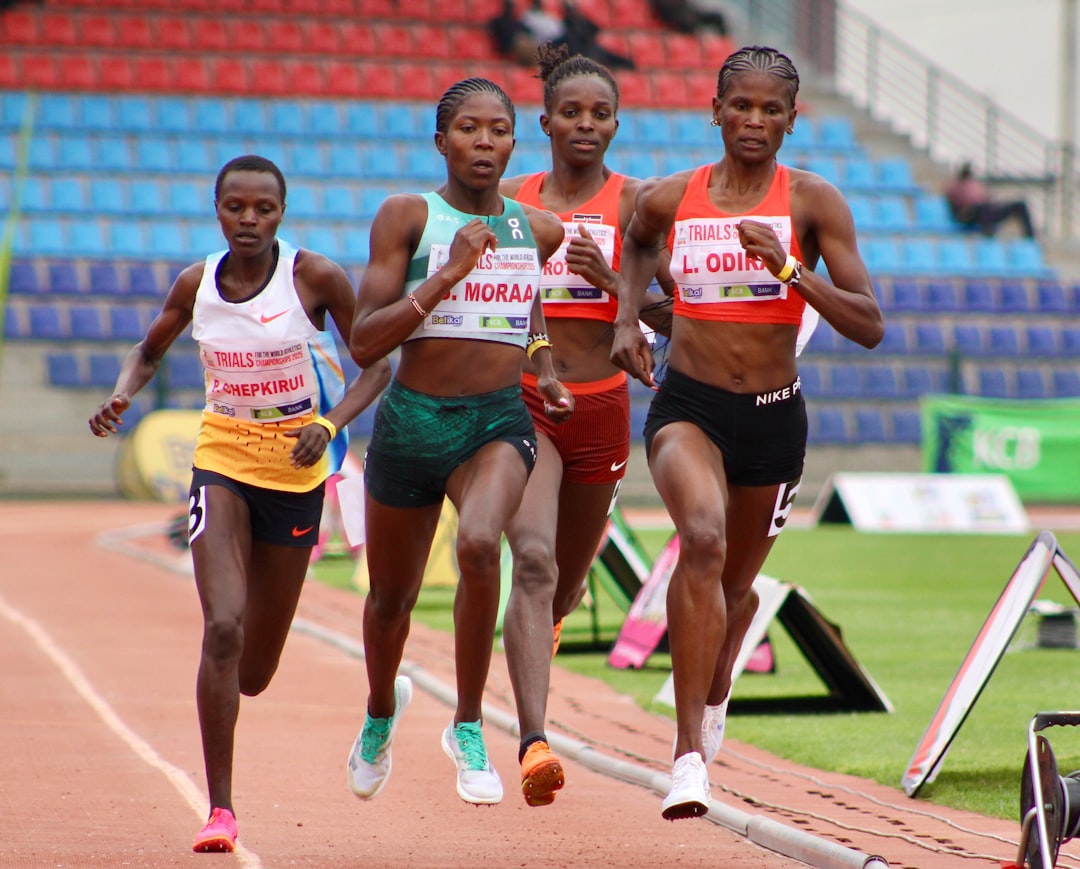
Kenya’s four silver medals came from Simon Kiprop Koech in the men’s steeplechase, Diana Wanza in the women’s 10,000 metres, Stephen Ndangiri Kihu in the men’s 10,000-metre race walk and Lilian Odira in the women’s 800 metres.
The range is worth noticing. Wanza extended Kenya’s long-distance tradition. Odira, the reigning world champion, was beaten by England’s Georgia Hunter Bell but remained on the podium in a tactical 800-metre final. Kihu’s silver in the race walk offered a glimpse of competitive potential beyond the country’s usual distance-running script.
Five bronze medals completed the tally, including a medal in weightlifting and Timothy Cheruiyot’s bronze in the men’s mile. The mile returned to the Commonwealth programme after a 60-year absence, and Cheruiyot finished behind Scotland’s Josh Kerr and Australia’s Cameron Myers.
What the 12 medals reveal about Kenyan athletics
The positive reading is straightforward: Kenya’s pipeline is still producing championship-level athletes. Serem and Kipsang showed the nerve required to win major finals, while Cherotich confirmed that her trajectory points beyond Commonwealth success.
The harder reading is just as important. All three Kenyan gold medals came on the track. Most of the country’s medals were concentrated in athletics, with limited returns from the wider programme. Kenya entered competitors across several sports, but the medal table still leaned heavily on one national strength.
That concentration is both an advantage and a warning. Athletics gives Kenya global recognition at a relatively low infrastructure cost compared with swimming, track cycling or other equipment-intensive sports. Yet a country that depends too heavily on distance running leaves medals—and sporting careers—undeveloped elsewhere.
Three athletes whose futures now demand attention
Edmund Serem: from prospect to senior champion
Serem’s Glasgow gold adds a major senior title to a career that had already attracted attention at youth level. His next challenge is consistency against Olympic and world-championship fields, where tactical quality is higher and the margins are smaller. The raw material is visible: composure, speed over barriers and confidence under pressure.
Faith Cherotich: a record-breaker entering her prime
Cherotich’s Games record makes her the clearest candidate from this team to become a defining name of the next Kenyan athletics era. Her future will be measured against the world’s best, not only regional or Commonwealth competition. Managing workload and maintaining technical efficiency over the barriers will matter as expectations rise.
Mathew Kipchumba Kipsang: the racer who refused to wait
Kipsang’s late break in the 5,000 metres showed a valuable instinct. Championship finals are often decided by athletes prepared to make the first serious commitment. Converting that instinct into a durable international career will require performance across different race shapes, faster fields and a longer calendar.
What should happen after Glasgow?
Medals can create headlines without creating systems. Kenya’s responsibility is to ensure that Glasgow becomes a development checkpoint, not a temporary celebration.
That means protecting emerging athletes from over-racing, improving medical and sports-science support, giving coaches stable development pathways and expanding investment beyond track. It also means treating race walking, weightlifting, para sport, basketball and cycling as disciplines worthy of long-term planning—not decorative additions to a delegation.
The next generation is present. The question is whether the system around it will become as ambitious as the athletes themselves.
Frequently asked questions
How many medals did Kenya win at the 2026 Commonwealth Games?
Kenya won 12 medals at Glasgow 2026: three gold, four silver and five bronze.
Who won gold for Kenya at Glasgow 2026?
Edmund Serem won the men’s 3,000m steeplechase, Faith Cherotich won the women’s 3,000m steeplechase, and Mathew Kipchumba Kipsang won the men’s 5,000m.
Where did Kenya finish on the medal table?
Kenya finished 13th in the final Glasgow 2026 Commonwealth Games medal table.