
Linda Mwananchi says it collected KSh2,850,711.28 on 31 July 2026 during a KSh100 contribution challenge, pushing its reported cumulative fundraising to KSh8,704,770.38. The money matters. The more revealing story, however, is the number of people willing to give.
The political movement reported 170,986 confirmed contributions by the end of July. Earlier campaign data showed gifts ranging from KSh1 to KSh5,000, with an average contribution of about KSh55 during one early phase. In a country where political finance has traditionally been associated with wealthy patrons, party elites and opaque war chests, those small payments are an attempt to build something different: political participation through the M-Pesa menu.
But a successful PayBill drive is not yet a political revolution. It is a signal—and signals still have to survive scrutiny.
How much did Linda Mwananchi raise?
According to figures published by the movement and reported by Kenyan media, Linda Mwananchi had raised KSh8,704,770.38 in total by 31 July 2026. Of that amount, KSh2,850,711.28 was reportedly collected during the day’s KSh100 challenge.
The latest figure followed an earlier milestone of KSh2,210,836.82 within roughly 36 hours of launching the PayBill. On the first day, organisers said 9,419 people contributed KSh519,144. That early result worked out to an average contribution of approximately KSh55.
These figures are organiser-reported. They demonstrate fundraising momentum, but UpNComin has not independently audited the PayBill statements or expenditure records.
Why small-donor political fundraising matters in Kenya
Kenyan politics is expensive. Rallies require transport, venues, sound systems, security, organisers, publicity and welfare support. Candidates and movements without access to wealthy financiers often struggle to build a national operation.
Small-donor fundraising can change that relationship in three ways.
- It distributes financial power. A movement funded by thousands of modest contributions may have less reason to depend on one financier.
- It turns passive support into participation. Sending KSh10 or KSh100 is a small act, but it creates a psychological stake in the organisation.
- It creates measurable mobilisation data. Contribution frequency, geography and repeat giving can show where genuine support exists—if handled lawfully and transparently.
The model is not entirely new internationally, but Kenya’s widespread adoption of mobile money makes the mechanics unusually simple. A political message can travel through social media and produce a contribution within minutes.
Who is behind Linda Mwananchi?
Linda Mwananchi has been publicly associated with Nairobi Senator Edwin Sifuna and other opposition figures positioning the movement as a citizen-driven political force ahead of Kenya’s 2027 General Election.
Sifuna said the PayBill was temporarily registered under his name because Linda Mwananchi was not yet a registered political party. He has also said the money would support movement logistics and that its use would be publicly accounted for.
That promise is now central to the movement’s credibility. When political money is collected through an account attached to an individual, clear reporting becomes more—not less—important.
The real test is transparency
A running total is useful, but it is not the same as accountability. Linda Mwananchi can strengthen public confidence by publishing regular statements showing money received, transaction costs, expenditure categories, suppliers paid and the balance remaining. An independent review would make the disclosure stronger.
Donor privacy must also be protected. Mobile numbers and transaction records are sensitive personal data. A campaign that learns how to raise money digitally must also demonstrate that it can protect supporter information and comply with Kenya’s data-protection and political-finance rules.
The standard should be straightforward: supporters should be able to understand where the money went without exposing individual donors to unnecessary risk.
Does KSh8.7 million prove electoral support?
No. It proves that the movement can attract attention and persuade many people to complete a low-cost digital action. That is valuable, but voting is a different test.
Political fundraising figures can be distorted by repeat contributions, coordinated online enthusiasm or support concentrated in a few areas. The reported 170,986 contributions should therefore not automatically be read as 170,986 unique voters.
To become a durable political organisation, Linda Mwananchi will need structures beyond the PayBill: local organisers, a defined policy programme, credible candidates, legal compliance, conflict-resolution systems and supporters willing to participate offline.
Could this reduce dependence on political godfathers?
Potentially—but only if the movement remains transparent and broadens its donor base. Small-donor funding can reduce the leverage of a single sponsor. It does not automatically eliminate elite influence, internal power struggles or undisclosed support.
The more important shift may be cultural. If ordinary Kenyans become accustomed to financing political organisations directly, they may also demand clearer accounts, greater influence over priorities and better performance from the people they support.
That exchange is healthier than politics presented as a gift from wealthy leaders to grateful citizens. Citizens fund the organisation; the organisation answers to citizens.
What happens next?
Linda Mwananchi’s fundraising has given the movement visibility and an early organisational asset. Its next milestone should not simply be a larger number. It should be a credible public account of how the first millions were used and what outcomes the spending produced.
If the movement can convert micro-donations into transparent operations, serious policy and lasting local structures, the KSh100 challenge may be remembered as more than a viral campaign. If it cannot, the PayBill total will remain an impressive digital moment with limited political consequence.
Frequently asked questions
How much did Linda Mwananchi raise on 31 July 2026?
The movement reported raising KSh2,850,711.28 during its KSh100 challenge on 31 July, taking cumulative collections to KSh8,704,770.38.
Who controls the Linda Mwananchi PayBill?
Edwin Sifuna said the account was registered under his name because the movement was not yet registered as a political party. He promised public accounting of money received and spent.
What will the money be used for?
Organisers say the funds will support mobilisation, meetings, service providers, voter readiness and other movement logistics. Independently audited expenditure details had not been presented in the reports reviewed for this article.
Does the contribution count equal the number of donors?
Not necessarily. A contribution count can include repeat transactions from the same person. It should not be treated automatically as a count of unique supporters or future voters.
Sources: The Star, People Daily and the movement’s publicly reported figures as cited by Kenyan media.
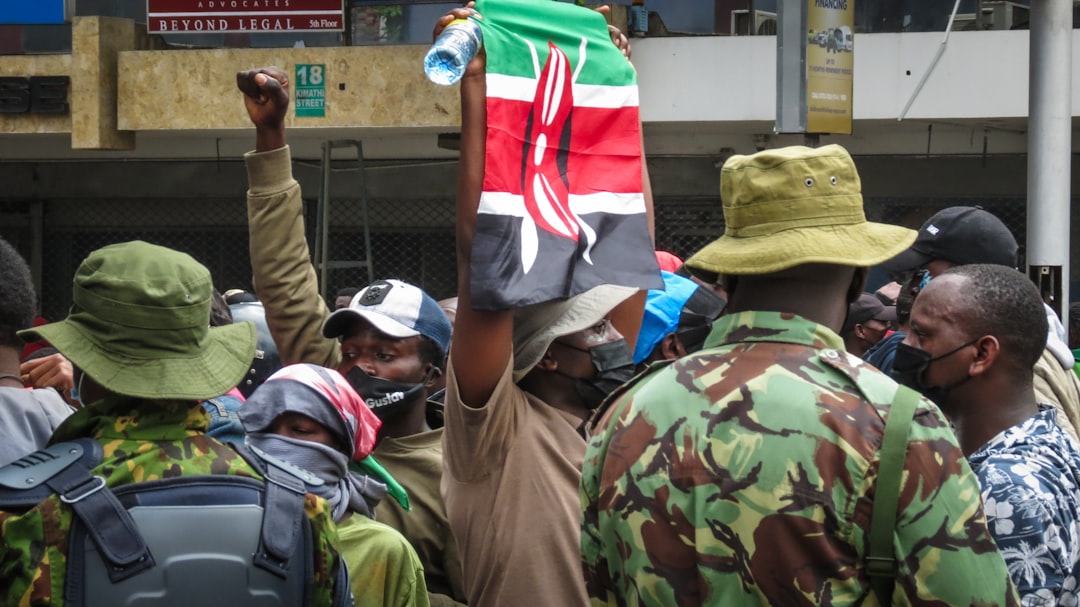
Featured image is illustrative and does not depict a Linda Mwananchi event. Photo by Storyzangu Hub via Unsplash.