Five Kenyan wildlife veterinarians have performed what is believed to be the first documented successful corrective surgery for atresia ani in a white rhinoceros, saving a five-day-old calf named Bahati.
The achievement belongs to Dr Mukami Ruoro Oundo and Dr Mathew Mutinda Ndunda of the Kenya Wildlife Service (KWS), Dr Robert Aruho of Mount Kenya Wildlife Conservancy, Dr Joseph Mbuthia of Ol Pejeta Conservancy, and Dr Benjamin Oundo of Northern Kenya Veterinary Services.
Their patient could not wait. Bahati had been born without a functional anal opening, meaning she could not pass waste. Without urgent treatment, the rare congenital condition would have been fatal.
Who are the Kenyan veterinarians behind Bahati’s surgery?
- Dr Mukami Ruoro Oundo — Kenya Wildlife Service
- Dr Mathew Mutinda Ndunda — Kenya Wildlife Service
- Dr Robert Aruho — Mount Kenya Wildlife Conservancy
- Dr Joseph Mbuthia — Ol Pejeta Conservancy
- Dr Benjamin Oundo — Northern Kenya Veterinary Services
Most reports naturally lead with Bahati. She is the vulnerable calf at the centre of the story, and her recovery is the outcome that matters most. But the deeper UpNComin story is about the Kenyan specialists whose skill, speed and institutional cooperation turned a near-certain death into a genuine chance at life.
How Bahati was found
Bahati, a southern white rhino calf, was found abandoned in the bush by rangers at Ol Pejeta Conservancy. The team reportedly remained with her overnight before she was examined the following morning by veterinarians led by Dr Mbuthia.
She was transferred to Mount Kenya Wildlife Conservancy for specialist care. There, the medical team diagnosed atresia ani, a congenital defect in which an animal is born without a normal opening at the end of the digestive tract.
In practical terms, Bahati could eat but could not eliminate waste. At only five days old, every hour mattered.
What happened during the white rhino surgery?
The multidisciplinary team placed Bahati under full immobilisation and epidural anaesthesia. During an operation lasting about two hours, the veterinarians created a functional rectal opening so that the calf could pass waste naturally.
The first decisive test came shortly after she was revived from anaesthesia: Bahati passed stool. It sounds like an ordinary biological act. In this case, it was the clearest early evidence that a highly unusual procedure had worked.
KWS said the intervention was, to the best of its knowledge, the first successful corrective surgery for atresia ani documented in a white rhinoceros. That careful wording matters. Veterinary records involving rare wildlife are not always comprehensive, so “believed to be the first documented” is more accurate than presenting the claim as settled beyond dispute.
Why the operation matters beyond one rhino calf
This was not simply a rescue story with a happy ending. It demonstrated a conservation capability that is easy to overlook: Kenya does not only protect wildlife with rangers, fences and anti-poaching patrols. It also relies on highly trained veterinarians able to diagnose rare conditions, manage anaesthesia in enormous wild animals and improvise responsibly when the medical literature offers few precedents.
The operation also crossed institutional boundaries. KWS, Mount Kenya Wildlife Conservancy, Ol Pejeta Conservancy and Northern Kenya Veterinary Services contributed expertise. No single organisation tried to own the moment. The calf’s survival came first.
That model is important for African science. Breakthroughs are often presented as the work of a lone genius. In reality, difficult field medicine depends on systems: rangers who notice a problem, transport teams that move an animal safely, facilities equipped for treatment, keepers who manage recovery and specialists prepared to share decisions under pressure.
Bahati’s recovery: what we know now
On 1 August 2026, Mount Kenya Wildlife Conservancy reported that Bahati was eating, becoming more confident and showing signs of a playful personality while remaining under close observation by her keeper and veterinary team.
That is encouraging, but recovery is not a single event. A successful operation does not remove the need for continuing monitoring, wound care, nutrition and assessment of how the reconstructed opening functions as the calf grows. The medical milestone has been reached; the longer rehabilitation story is still being written.
The talent Africa too rarely names
When African expertise makes international headlines, the professionals behind it are often compressed into a phrase such as “a team of local vets.” That is not enough. Names matter because expertise becomes visible when readers can identify the people who produced the result.
Dr Oundo, Dr Ndunda, Dr Aruho, Dr Mbuthia and Dr Oundo represent a class of African professionals whose work is technically demanding, globally relevant and usually performed far from television studios. Their achievement gives younger Kenyans a more expansive picture of what a career in veterinary medicine can become—from animal care to conservation science, emergency surgery and the protection of threatened species.
It also challenges a tired assumption that frontier expertise must arrive from outside Africa. In this case, the knowledge, judgment and hands were already here.
Why saving a southern white rhino matters
Southern white rhinos have recovered from historic population collapse, but they remain dependent on intensive conservation and protection. Kenya is one of the countries carrying that responsibility, and Ol Pejeta is especially significant in global rhino conservation.
Every calf is therefore more than an individual clinical case. A surviving young rhino can become part of a population’s long future. That does not mean conservation should reduce Bahati to a statistic. It means one carefully executed operation can carry consequences measured in decades.
What happens next for Bahati?
The immediate priorities are continued feeding, careful observation and ensuring that the surgical correction remains functional as she develops. If recovery continues, Bahati may eventually move from intensive care into the more ordinary rhythms of a young rhino’s life.
Ordinary is the victory here.
For the five veterinarians, the case may become a valuable reference for wildlife teams confronting similar congenital conditions in the future. A rare procedure performed under pressure can become institutional knowledge—documented, studied and improved upon.
Frequently asked questions
What condition did Bahati have?
Bahati was diagnosed with atresia ani, a rare congenital condition in which an animal is born without a functional anal opening and cannot pass waste normally.
Was this the world’s first surgery of its kind?
KWS and the veterinarians involved describe it as the first documented successful corrective surgery for atresia ani in a white rhinoceros, to the best of their knowledge.
Where was the operation performed?
The approximately two-hour procedure was performed at Mount Kenya Wildlife Conservancy after Bahati was transferred from Ol Pejeta Conservancy.
Is Bahati recovering?
Yes. The latest update on 1 August 2026 said she was eating, growing stronger and becoming more active under close veterinary and keeper supervision.
Sources: Kenya Wildlife Service; Kenya News Agency; The Star recovery update.
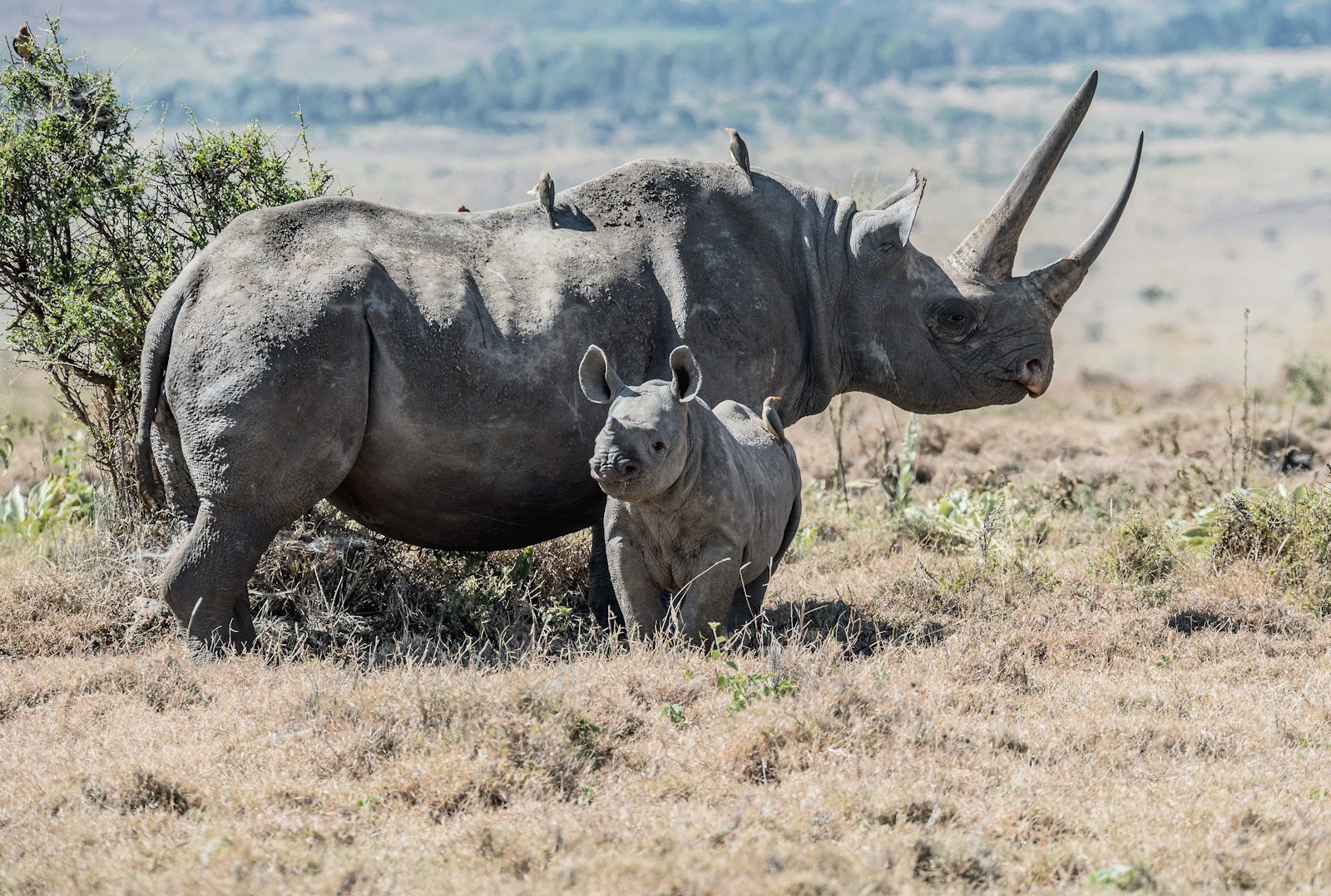
Featured image is an illustrative photograph of rhinos at Lewa Wildlife Conservancy, not Bahati. Photo: David Clode/Unsplash.